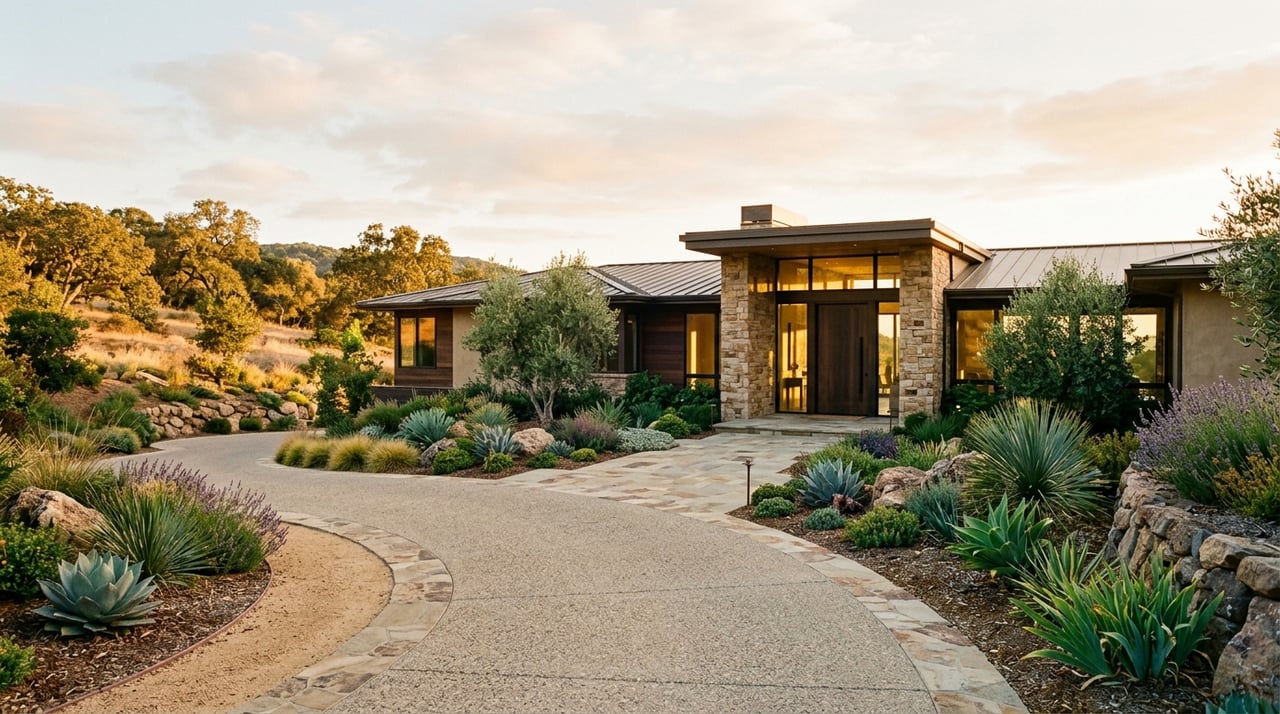
What To Know Before Buying In Valley Center
July 16, 2026
July 16, 2026
Buying in Valley Center can be a great move if you want more space, a different pace, and a property that feels less cookie-cutter than many suburban neighborhoods. But this is also a market where the details behind the property matter just as much as the home itself. If you are thinking about buying in Valley Center, this guide will help you understand the local land-use patterns, utilities, roads, and fire-safety factors that can shape your costs, plans, and day-to-day ownership. Let’s dive in.
Valley Center is part of unincorporated North County and has long been described in county planning as a traditionally agricultural community. That matters because the area is not planned like a standard suburban city with mostly uniform neighborhoods and services.
Instead, county land-use materials include a mix of semi-rural residential areas, rural lands, and village-core mixed-use areas. In practical terms, that means you may see anything from larger lots and open land to more compact pockets of development, sometimes within a short drive of each other.
In Valley Center, a home search is often about more than square footage and finishes. You may also be choosing between estate-style lots, acreage, or a property closer to the village core.
County planning notes that semi-rural areas are generally low-density residential estates that do not typically rely on sewer service. Rural lands are also intended for open space, resource production, conservation, and recreation, which helps explain why some parts of Valley Center feel much more like country living than tract-home suburbia.
One of the biggest things to verify before you buy is water service. Valley Center Municipal Water District covers about 101 square miles and provides water, wastewater, and recycled water services, but it states that roughly 71% of the land-use area receives water service.
That means you should not assume every parcel has the same setup. A property may already have service in place, or it may require additional steps to confirm service availability.
Before making an offer, find out whether the property is within Valley Center Municipal Water District service and whether a meter already exists. If service is not already in place, you may need to look into new service requirements and whether a utility easement is needed.
The district also says new service requests are handled on a first-come, first-served basis. That makes early verification especially important if you are buying land or a home with future improvement plans.
Valley Center’s topography is hilly, and the water district explains that water must be pumped to more than 80% of customers. Because pumping charges vary by elevation, two properties in the same general area may not carry the same utility cost structure.
This does not mean one property is automatically better than another. It just means your due diligence should include asking how the site’s elevation could affect regular water-related costs.
In many suburban areas, buyers can safely assume sewer service is standard. In Valley Center, that is not always the case.
The water district says wastewater service is currently limited to certain areas, including the Interstate 15 corridor on the west end of the district and Woods Valley Ranch. County planning materials also note that unincorporated San Diego County includes both sewage treatment facilities and individual on-site septic systems.
If a property is on septic, you will want to understand that system before you move forward. You should confirm the type of wastewater system, whether there are limits on future expansion or replacement, and how that system fits your long-term plans for the property.
This is especially important if you are buying with the idea of adding square footage, building additional structures, or making other site improvements later. A property’s utility setup can directly affect what is practical in the future.
If you are considering a larger parcel or vacant land in Valley Center, your checklist should go beyond the usual homebuying questions. County materials note that groundwater-dependent development can trigger groundwater investigations and well tests.
That means if your plans depend on water access, buildability, or future development potential, parcel-level review is essential. In a market like Valley Center, land can offer real opportunity, but only when you understand the property’s specific constraints and requirements.
Roads can be a much bigger part of ownership in Valley Center than in a typical subdivision. County policy says the County maintains public roads in the unincorporated area, but private roads are not maintained by the County and generally are not open to the public.
That distinction can affect more than your commute. It can influence maintenance responsibility, long-term costs, delivery access, and how smoothly emergency vehicles can reach the property.
Before you buy, confirm whether the property is accessed by a public road or a private road. If the road is private, ask who is responsible for upkeep and repairs and whether there are shared maintenance obligations.
For larger lots or homes in more rural settings, road condition and maintenance terms can become a meaningful part of ownership. It is much better to understand that before closing than after move-in.
Wildfire preparedness is a core part of buying in Valley Center. CAL FIRE uses state fire hazard maps to classify wildfire hazard, and the County of San Diego fire code says defensible-space rules can vary by fire district.
The county code specifically lists the Valley Center Fire Protection District as having its own weed-abatement and defensible-space ordinance. For buyers, that means fire-safety planning is not just a general idea. It is a property-specific due diligence item.
You should confirm which fire district applies to the property and what defensible-space or weed-abatement rules come with it. You will also want to evaluate whether the driveway and overall site layout provide workable access for emergency vehicles.
On a semi-rural or rural property, ongoing vegetation management may simply be part of ownership. Knowing that upfront can help you budget time, effort, and maintenance costs more realistically.
Because Valley Center is so parcel-specific, a solid pre-offer review can save you from surprises later. Here are some of the most important things to verify before you move ahead:
Valley Center can be a strong fit if you want more land, more privacy, or a different ownership experience than a typical suburban tract neighborhood offers. At the same time, this is a market where buying smart means looking past surface-level features and understanding how the parcel actually works.
That is where local experience can make a real difference. When you know the right questions to ask about utilities, access, and property conditions before you write an offer, you can move forward with a lot more confidence.
If you are thinking about buying in Valley Center and want practical guidance tailored to your goals, connect with Jeff Underdahl for clear advice and experienced support.
Stay up to date on the latest real estate trends.





Get assistance in determining current property value, crafting a competitive offer, writing and negotiating a contract, and much more. Contact me today.